

Uncategorized

thought catalog xv89tmiazc unsplash

What Is Curation? How It Differs From Search and Why It Matters in the AI Era

Home For Individuals For Businesses For Communities Xafarii AI Blog Build With Us Contact Home For Individuals For Businesses For Communities Xafarii AI Blog Build With Us Contact Opportunities What Is Curation? How It Differs From Search and Why It Matters in the AI Era We now live in a world where almost any question can be answered with a search. Looking for a graphic designer? Search engines can produce hundreds of profiles. Trying to choose the right software for your business? There are comparison articles, reviews, videos, forums and product directories. Looking for somewhere new to visit, a learning resource or a reliable service provider? Chances are, someone has already published something about it. Yet people still struggle to find what they actually need. Why? Because finding information is not the same as finding the right information. Search engines have made information more accessible, but accessibility does not automatically produce clarity. A list of 100 options can leave someone more confused than they were before searching. The challenge is no longer simply finding information. It is knowing what is relevant, what is trustworthy, what is worth exploring and what to do with what we find. This is where curation becomes valuable. Search helps people discover possibilities. Curation helps them make sense of those possibilities. Discovery goes a step further by connecting people to useful information, experiences, people and opportunities they may not have known to look for. As the volume of online content continues to grow, the ability to filter, evaluate, organize and recommend useful information becomes increasingly important. What Is Search? Search is the process of retrieving information in response to a query. When you type “best cybersecurity courses for beginners” into a search engine, it attempts to identify pages, videos, courses and other resources relevant to your words and intent. Search systems use factors such as relevance, quality signals, popularity, freshness and personalization to determine which results appear. Their primary job is to help you find potentially relevant information. However, a search result is not automatically a recommendation. A page appearing near the top of search results does not necessarily mean it is the best resource for your personal circumstances. It means the system has ranked it according to its retrieval and ranking mechanisms. The distinction matters because different people can search for the same thing while needing completely different solutions. A university student looking for a laptop may prioritize affordability and battery life. A graphic designer may prioritize processing power, memory and display quality. The search query may look similar. The best answer may be entirely different. Search helps us locate what exists, but finding what is suitable often requires additional context and judgment. What Is Curation? Curation is the deliberate process of selecting, evaluating, organizing and presenting information so that it becomes more useful to a particular audience. Instead of simply collecting links, a curator applies judgment. They ask questions such as: Is this information accurate and credible? Who is it actually useful for? Is it current? What makes it better than the alternatives? What should someone know before using it? In what order should the information be consumed? What important gaps or limitations remain? Consider someone searching for free cybersecurity learning resources. A search engine might return hundreds of websites, online courses, YouTube playlists and downloadable guides. A curator could turn those scattered results into a beginner’s roadmap containing five carefully selected resources, an explanation of what each teaches, the prerequisites, the cost and the order in which to study them. The difference is not necessarily the information itself. It is the judgment and structure applied to that information. A useful curator doesn’t just ask, “What can I find?” They also ask, “What is worth sharing, and why should someone care?” Search vs. Curation vs. Discovery: Understanding the Difference These three concepts are connected, but they serve different purposes. Search helps you locate. It responds to a question or query by retrieving potentially relevant information. It is particularly useful when you already know what you are looking for. Curation helps you evaluate and organize. It applies context, judgment and selection to make information easier to understand and use. Discovery helps you encounter possibilities. It connects you to things you may not have known to search for in the first place. Imagine you are looking for a graphic designer. Through search, you might find hundreds of designers and portfolios. Through curation, you might discover a collection of designers selected for their experience in branding, illustration or packaging, with explanations of their strengths and suitability. Through discovery, you might encounter a designer through a recommendation from another business owner, a creative community or a board showcasing interesting creative work. You may not have known that particular designer existed, let alone known to search for them. This is an important distinction. Some of the most valuable things we discover are not things we initially set out to find. Why More Search Results Don’t Always Mean Better Decisions It seems logical that more information should make decision-making easier. In practice, the relationship is not that simple. When people face too many alternatives, they may spend more time comparing options, struggle to identify meaningful differences or postpone the decision altogether. Researchers have studied this phenomenon under concepts such as choice overload. Its effects depend on the situation, the complexity of the options and the individual, so more choices do not always create worse outcomes. Still, the practical problem is familiar. Imagine a founder searching for a customer relationship management platform. They find 40 tools, each promising automation, analytics, integrations and improved sales performance. After two hours, they have more tabs open but no decision. The problem is no longer access to information. It is the effort required to determine which information matters. A useful curator reduces the decision burden by applying relevant criteria before presenting the options. For the founder, those criteria might include budget, team size, ease of use, integration requirements and the specific sales problem the

What Is Curation? How It Differs From Search and Why It Matters in the AI Era Read More »
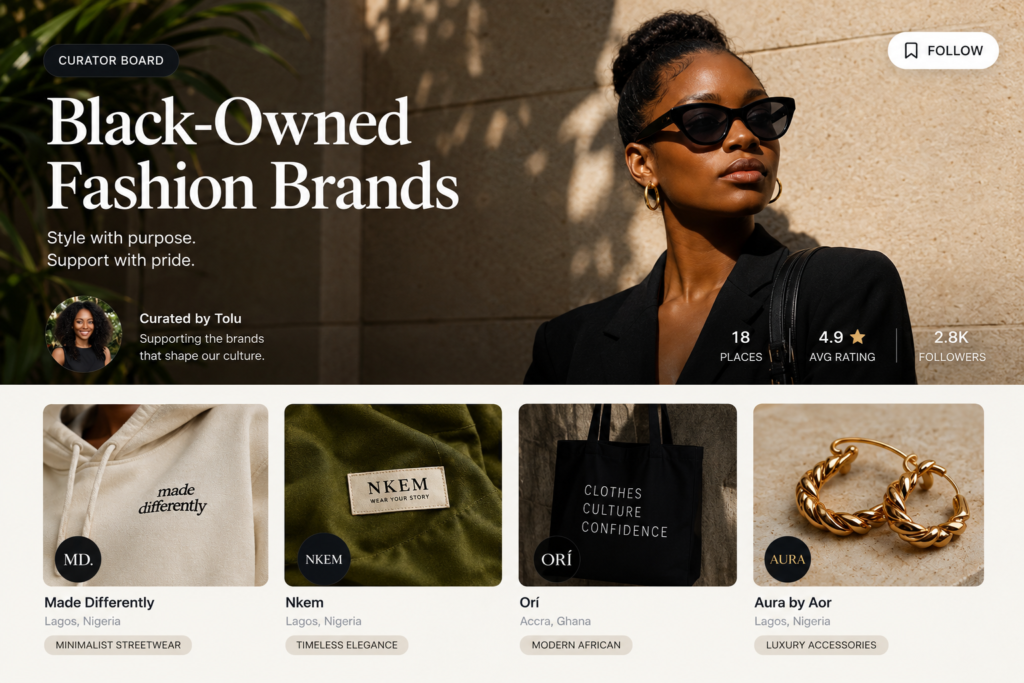
black owned fashion curator board xafarii

Curation: Things You Can Curate and How to Monetize Your Curations

Home For Individuals For Businesses For Communities Xafarii AI Blog Build With Us Contact Home For Individuals For Businesses For Communities Xafarii AI Blog Build With Us Contact Web design Curation: Things You Can Curate and How to Monetize Your Curations Your knowledge, taste, and recommendations may be more valuable than you think. Think about the last time someone asked you to recommend a good restaurant, a reliable service provider, a place to spend the weekend, or a community worth joining. Perhaps you immediately knew what to recommend. Maybe your friends regularly come to you because you always seem to know where to find what they need. You may not realise it, but you are already doing something valuable: curation. Curation involves discovering, selecting, organising, and sharing information, resources, products, or experiences around a particular interest or need. Instead of making people search through countless options, a curator helps them find options worth considering. In a world overflowing with information, that ability is increasingly useful. And when curators consistently provide value to their audiences, there may be opportunities to turn their knowledge into income. Let’s explore what you can curate and how you might monetise your efforts. What Is Curation? Curation is more than collecting links or putting random items together. It involves making thoughtful decisions about what belongs in a collection, who the collection is for, and why the selected items matter. Consider the difference between listing 20 restaurants and creating a guide to affordable date-night restaurants, complete with locations, price ranges, ambience, and recommendations for different occasions. The second approach adds context that helps people make decisions. Good curation can help people save time, discover options they might otherwise miss, compare alternatives, and make more informed choices. The value of curation is not necessarily in having the largest collection. It is in helping the right people find the right things. 7 Things You Can Curate Curation can begin with almost any subject you understand well, care about, or are willing to research carefully. 1. Places and Local Experiences People are constantly looking for places to eat, relax, work, explore, and spend time with others. You could curate affordable restaurants, weekend activities, family-friendly attractions, work-friendly cafés, travel destinations, or hidden gems in your city. For example, a guide to affordable weekend experiences in Lagos could include locations, estimated budgets, opening hours, and activities suited to different interests. The more useful the information, the easier it becomes for people to act on your recommendations. 2. Businesses and Service Providers Finding a business is not always the same as finding one that suits your needs. You could curate photographers, makeup artists, event planners, home-service providers, freelancers, or small businesses offering locally made products. Imagine a collection of event vendors in Abuja that helps people compare photographers, decorators, caterers, and venues in one place. A useful collection does more than name businesses. It explains what they offer, who they serve, and how people can contact them. 3. Products and Shopping Recommendations People often turn to creators, reviewers, and knowledgeable friends before making purchases. You could curate skincare products, affordable fashion finds, technology accessories, books, home organisation products, or gift ideas. A collection titled “Useful Work-from-Home Products Under ₦30,000” is more actionable than a random list of products. Explain why each item is included, verify important details, and be transparent about whether you have personally used a product or are recommending it based on research. 4. Communities and Professional Networks Sometimes, what people need most is not another product. They need the right people around them. You could curate communities for entrepreneurs, parents, creatives, technology professionals, fitness enthusiasts, or people pursuing particular career goals. For example, a guide to professional communities could explain what each group offers, who can join, and whether it provides networking, mentorship, learning resources, or other opportunities. This makes it easier for people to find communities that genuinely match their needs. 5. Educational Resources and Learning Opportunities The internet contains countless courses, scholarships, tutorials, books, and newsletters. Knowing where to begin can be difficult. You could curate free online courses, scholarships, digital skills resources, career-development opportunities, or learning paths for specific professions. A guide to free digital marketing courses, for instance, could organise resources by skill level, subject, duration, and certification availability. Always verify deadlines, eligibility requirements, and other important details before publishing time-sensitive opportunities. 6. Events and Opportunities Events can connect people with knowledge, relationships, customers, and new experiences. You could curate industry conferences, workshops, networking events, creative showcases, community meet-ups, or volunteering opportunities. A useful event collection should include dates, locations, registration details, costs, and information about who would benefit from attending. You could even specialise in a particular niche, such as entrepreneurship events in Nigeria or creative industry opportunities across Africa. 7. Experiences Built Around Specific Interests Some collections are most useful when they help people plan an entire experience rather than choose an individual product or location. Examples include a birthday celebration on a budget, a solo self-care day, a creative weekend in your city, or a family-friendly holiday itinerary. A curator could bring together suitable locations, businesses, activities, and practical planning information to make the experience easier to organise. This can also create opportunities for several relevant businesses to be discovered through one collection. How Can You Monetise Your Curations? Creating a useful collection is a starting point. Monetisation depends on the audience you serve, the value you provide, and the business model that suits your niche. Here are six potential approaches. 1. Affiliate Marketing Affiliate marketing allows you to earn a commission when someone purchases a product or service through a qualifying referral link. For example, a curator who creates a guide to useful travel accessories could include affiliate links to eligible products. When readers make qualifying purchases, the curator may earn commissions according to the programme’s terms. The key is to recommend products that genuinely match the audience’s needs and disclose affiliate relationships. 2. Sponsored Collections Businesses may pay to be

Curation: Things You Can Curate and How to Monetize Your Curations Read More »

gea22

The Problem with Finding Reliable Businesses, and How We Are Solving It

Home For Individuals For Businesses For Communities Xafarii AI Blog Build With Us Contact Home For Individuals For Businesses For Communities Xafarii AI Blog Build With Us Contact BUSINESS DISCOVERY The Problem with Finding Reliable Businesses, and How We Are Solving It Imagine you need a photographer for an important event. You search online and find several options. Their pictures look impressive, their social media pages are attractive, and some have glowing reviews. But you still have questions. Are the reviews genuine? Are the pictures from their actual work? Will they deliver what they promise? And will the final price match your budget? You have found several photographers, but you are still unsure who to trust. This is a common problem with finding businesses today. Discovering options is easier than ever, but deciding which option is right for you can still be difficult. Finding a Business Is Not the Same as Trusting One The internet has made it easier for businesses to reach customers. Social media, search engines, online directories, and messaging platforms have created more ways to discover products and services. However, information about a single business may be scattered across different platforms. Its prices might be on Instagram, customer feedback on Google, recent work on TikTok, and contact details somewhere else. Potential customers must piece everything together before making a decision. Even after doing their research, uncertainty remains. A professional-looking page does not automatically mean excellent service, and a long list of positive reviews does not tell the whole story. The challenge is no longer simply finding businesses. It is finding relevant information that helps people make informed decisions. Why Business Discovery Can Be Difficult 1. Information Is Scattered Customers often move between multiple platforms to compare businesses. This takes time and makes it harder to get a complete picture of their options. Important details, such as opening hours, service areas, prices, or contact information, may also be missing or outdated. 2. Online Reviews Have Limitations Reviews can help customers understand other people’s experiences, but they are not always enough to make a confident decision. Some reviews may be outdated, lack useful details, or fail to reflect what a particular customer needs. A business with excellent ratings may not necessarily be the best fit for every person. The goal should not be to dismiss reviews, but to consider them alongside other relevant information. 3. Visibility Does Not Always Reflect Suitability Businesses with larger advertising budgets or stronger social media followings may be easier to find. Meanwhile, smaller businesses with valuable products and excellent service can remain overlooked because they have limited online visibility. This creates a gap between businesses that deserve consideration and those customers actually discover. 4. Recommendations Often Lack Context A friend might recommend a great restaurant, but it may be too expensive for your budget. A colleague might suggest a reliable professional who does not offer the specific service you need. Recommendations are valuable, but their usefulness depends on the situation. People need more than a list of popular options. They need information that helps them understand which options suit their circumstances. What Better Business Discovery Should Look Like A better discovery experience should help people move beyond collecting names and links. It should make relevant information easier to access, provide useful context, and help customers compare their options according to their needs. This means bringing together several important elements: ● Accurate business information: Clear descriptions, contact details, locations, services, and operating hours. ●  Relevant recommendations: Suggestions that consider what someone is looking for rather than simply presenting popular options. ●  Useful community knowledge: Insights and experiences that help people understand their choices. ●  Better visibility for businesses: Opportunities for businesses to be discovered by people who may genuinely need their products or services. ●  More informed decisions: Enough context for customers to evaluate options instead of relying on appearances alone. No platform can guarantee that every business will deliver a perfect experience. However, better information and more thoughtful discovery can help people make better-informed choices. How Xafarii Is Approaching the Problem At Xafarii, we believe local commerce needs more than another place to search for businesses. We are building the trust layer for local commerce in Africa: a connected discovery experience designed to help people discover businesses, creators, places, and experiences through AI, community knowledge, and business intelligence. The idea is to make discovery more useful by connecting people with relevant options and the information they need to evaluate them. Rather than treating discovery as a simple list of results, Xafarii’s direction brings together technology and human insight to help people navigate their choices more meaningfully. For businesses, the goal is to create better opportunities to be discovered by relevant audiences. For customers, it is to make finding suitable options less fragmented and more informed. Xafarii is still developing this experience, and the aim is to build something that responds to real discovery challenges rather than simply adding more information to an already crowded digital world. What Businesses Can Do Today While better discovery systems continue to develop, businesses can take practical steps to help customers make informed decisions. Keep your information accurate. Make sure your contact details, location, opening hours, and services are up to date. Show real examples of your work. Where relevant, use genuine portfolios, product images, demonstrations, or case studies to help potential customers understand what you offer. Make important details easy to find. Clear descriptions, pricing guidance where possible, and straightforward ways to contact you reduce unnecessary uncertainty. Respond to questions and feedback. Helpful communication shows customers that you take their concerns seriously. Focus on the experience you deliver. Consistent service and honest communication give customers stronger reasons to recommend your business. These actions cannot eliminate every doubt, but they can help build confidence before a customer commits. Discovery Should Lead to Better Decisions Finding a business should not require customers to spend hours moving between platforms, comparing incomplete information, and guessing which option deserves their trust. People

The Problem with Finding Reliable Businesses, and How We Are Solving It Read More »